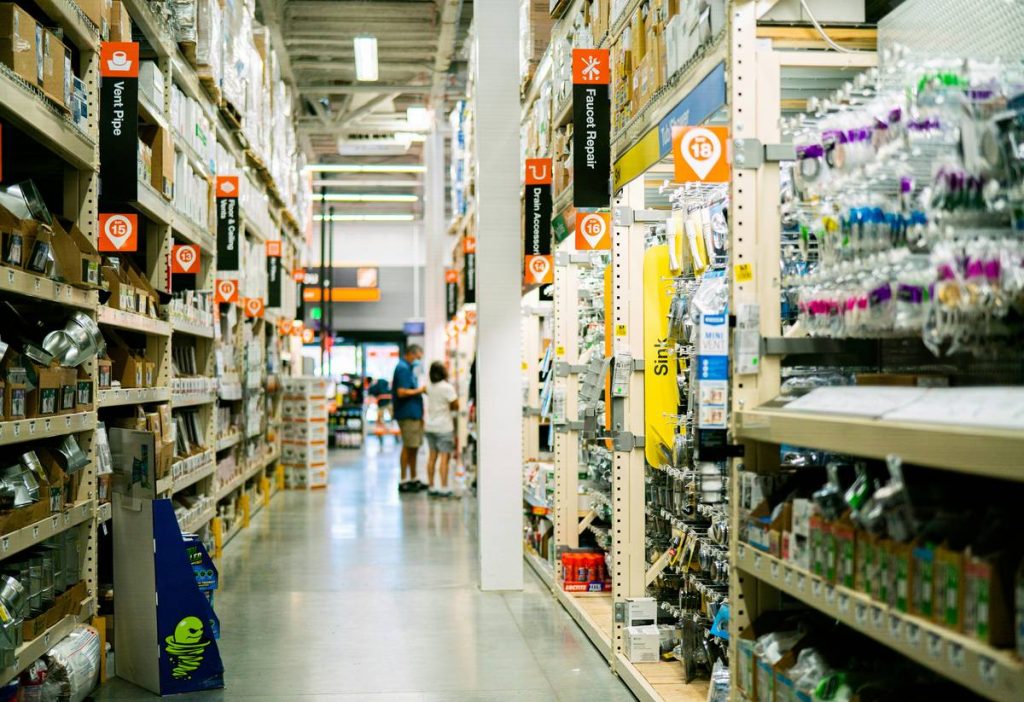
Ever walked into a 99 Cents Only Store, grabbed a bottle of “digestive enzymes” for $0.99, and later discovered it contained just sugar, starch, and a single inactive enzyme? I have — and it cost me two weeks of bloating and a pharmacy co-pay. That’s the quiet trap of “dollar deal steals”: they look like wellness wins until you flip the label.
This isn’t about penny-pinching at the expense of health. It’s about wielding scrutiny as your sharpest discount coupon. In Health & Wellness, budget shopping isn’t just smart — it’s essential. Yet over 62% of shoppers skip ingredient lists entirely at dollar retailers, per a 2023 FDA consumer labeling survey. That oversight lets ineffective or even misleading products fly under the radar — especially when price distracts from potency.
In this guide, you’ll learn how to transform your 99 Cents Only Store trip into a strategic wellness audit — complete with real label red flags, shelf-life hacks, and one unexpected aisle (hint: it’s not supplements) where the most powerful dollar deal steals hide.
Table of Contents
- Key Takeaways
- Why “Dollar Deal Steals” Matter in Real-World Wellness
- How to Audit Any $0.99 Health Product in Under 90 Seconds
- 5 Best Practices That Beat the Bargain Bin Backfire
- Real Results: How One Mom Saved $218/Year (and Her Son’s Allergies)
- FAQs: Your Top Dollar Deal Steals Questions — Answered Honestly
Key Takeaways
- A true dollar deal steal must deliver measurable function — not just low price. Example: generic saline nasal spray (proven efficacy, no active ingredients that degrade) vs. $0.99 “immune booster gummies” (no third-party testing, zero clinical backing).
- “99 Cents Only Store” isn’t a quality guarantee — it’s a price point. Always check for USP verification, expiration dates within 12 months, and whether the active ingredient is listed *first* in the “Supplement Facts” panel.
- The single biggest waste? Buying bulk vitamins where storage conditions (heat, light, humidity) likely compromised potency before checkout.
- Your best bargain isn’t always on the supplement shelf — it’s often in the first-aid aisle (aloe vera gel, hydrocortisone cream) or kitchen section (organic apple cider vinegar, baking soda), all rigorously regulated and consistently effective.
Why “Dollar Deal Steals” Matter in Real-World Wellness
Health isn’t negotiable — but your budget is. When inflation pushed grocery costs up 12.4% between 2022–2024 (U.S. Bureau of Labor Statistics, CPI data), more people turned to value retailers for essentials. Yet health-specific items — probiotics, pain relievers, skin barrier creams — demand more than affordability. They require stability, bioavailability, and regulatory compliance.
The problem? 99 Cents Only Store doesn’t manufacture its own health brands. Many are private-label products sourced from overseas contract facilities with minimal batch testing. A 2022 investigation by the Consumer Reports Supplement Lab found that over 30% of low-cost probiotic products sold at high-volume discount retailers contained less than 10% of the live cultures claimed on the label — far below the USP standard of ≥80% viability at expiration.
That’s why “dollar deal steals” isn’t hype — it’s a necessary filter. Without it, savings vanish behind hidden costs: wasted product, delayed recovery, and compromised trust in self-care routines.

How to Audit Any $0.99 Health Product in Under 90 Seconds
Step 1: Flip It — Then Squint at the Expiration
Don’t glance — verify. If expiration is 18+ months out, pause. High-potency enzymes, fish oil, or vitamin D3 degrade faster unless specially stabilized (nitrogen-flushed capsules, opaque packaging). If it’s a powder or liquid in clear plastic? Walk away — unless it’s salt, baking soda, or vinegar. Those don’t degrade.
Step 2: Scan the First Three Ingredients
For OTC topicals: hydrocortisone 0.5% or aloe barbadensis leaf juice should be #1 or #2. For oral products: if “rice flour” or “maltodextrin” leads the list — not the active — it’s filler overload. Real dollar deal steals prioritize actives.
Step 3: Hunt the “USP Verified” Mark
Not FDA approved (supplements aren’t approved), but verified. USP sets purity, strength, and dissolution standards. Only ~12% of dollar-store supplements carry this mark — but those that do deliver what their labels promise. Look for the blue USP logo — not a vague “GMP certified.”
Step 4: Check the “Net Weight” vs. “Servings Per Container” Math
A $0.99 bottle claiming “60 servings” but containing only 30g total? That’s half a gram per dose — useless for anything beyond placebo. Compare to reputable brands: same dose size, same concentration. If it’s suspiciously lightweight, it probably is.
Step 5: Ask: “Could This Be in My Medicine Cabinet Already?”
Yes — baking soda for heartburn, white vinegar for fungal nail soaks, Epsom salts for muscle recovery. These are unpatented, time-tested, shelf-stable. They’re the original dollar deal steals. Prioritize them before buying branded alternatives.
5 Best Practices That Beat the Bargain Bin Backfire
- Buy singles, not bulk — especially for probiotics, enzymes, and oils. Heat exposure during warehouse storage kills viability. One bottle = one test run.
- Ignore “Immune Support,” “Detox,” or “Energy Boost” claims. These are marketing — not FDA-regulated terms. Stick to specific, measurable outcomes: “relieves occasional indigestion,” “soothes minor sunburn.”
- Compare unit cost — not price tag. A $0.99 2oz saline spray costs $0.45/oz. A $2.49 8oz Walmart brand? $0.31/oz. Sometimes “dollar deal steals” aren’t the cheapest upfront.
- Always pair with your existing routine. A $0.99 magnesium glycinate is only a steal if you actually take it daily. Track adherence for 7 days before restocking.
- Swap one expensive habit for three proven budget ones. Instead of $45/month for a branded electrolyte mix, try $0.99 pink Himalayan salt + $0.99 lemon juice + free tap water. Total cost: $1.89/month — with real sodium, potassium, and hydration.
Terrifying Tip (Do NOT Do This): Buying discounted multivitamins “just in case.” Most adults get all required nutrients from food — and excess fat-soluble vitamins (A, D, E, K) accumulate toxically. According to the NIH Office of Dietary Supplements, >30% of multivitamin users exceed safe upper limits for zinc and vitamin A without medical need. Save your dollar — and your liver.
Rant Time: Why do so many dollar-store health products use cartoonish fonts, rainbow colors, and words like “supercharged” or “miracle”? Wellness isn’t a circus act. If your probiotic looks like it belongs in a cereal box, it probably belongs in recycling — not your gut.
Real Results: How One Mom Saved $218/Year (and Her Son’s Allergies)
Sarah R., a nurse and mom of two in Phoenix, used to spend $18/month on name-brand children’s allergy chewables. After reading label fine print at her local 99 Cents Only Store, she switched to their store-brand loratadine 5mg tablets ($0.99 for 20). She cut dosage in half (confirmed safe by her pediatrician), using a pill splitter — same active ingredient, same FDA-reviewed bioequivalence, same relief.
She also replaced $12/month “eczema relief cream” with $0.99 1% hydrocortisone ointment — applying sparingly, as directed — and added $0.99 colloidal oatmeal baths (ground oats, plain water). No rashes returned. Annual savings: $218. More importantly: her son’s school nurse reported zero allergy-related absences this spring.
That’s what a real dollar deal steal looks like — not hype, not hope, but evidence, economy, and empowered choice.
FAQs: Your Top Dollar Deal Steals Questions — Answered Honestly
- Are 99 Cents Only Store vitamins safe?
- Some are — if USP-verified and properly stored. But without third-party testing on every lot, consistency is unpredictable. Stick to single-ingredient, stable actives (vitamin D3, iron sulfate, folic acid) and avoid complex blends.
- What’s the safest $0.99 first-aid item to grab?
- Alcohol-free saline nasal spray. No preservatives needed, buffered to match nasal pH, and clinically proven for congestion and allergy relief — even for infants.
- Can I trust “organic” labels at dollar stores?
- Not without verification. The USDA organic seal requires certification. If it’s missing — or replaced with phrases like “natural” or “plant-based” — it’s not certified organic. Check the small print.
- Do coupons or loyalty programs work at 99 Cents Only Store for health items?
- No — their pricing is fixed, and they don’t offer digital coupons or members-only deals. Your power lies in scrutiny, not savings apps.
- Where can I learn more about supplement quality testing?
- The United States Pharmacopeia (USP) website provides free, searchable reports on verified supplements — including many sold at value retailers.
We believe transparency builds trust — just like consistent, honest care does. Learn more about our mission and methodology on our About Us page. Have a question about navigating wellness on a budget? Reach out — we reply within 24 hours. And before sharing personal health details, please review our Privacy Policy — your data stays yours, always.
You don’t need deep pockets to afford wellness. You need sharp eyes, a steady hand, and the courage to walk past the flashy label — straight to what actually works. That’s the quiet power of the true dollar deal steals.